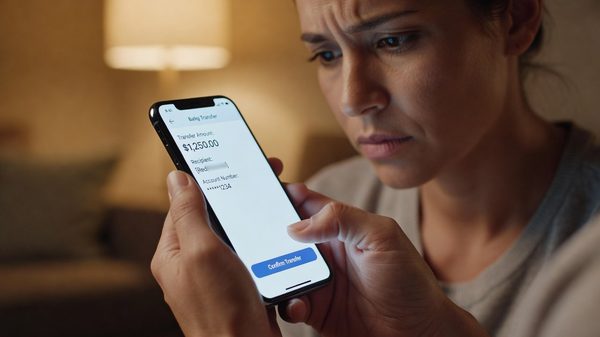
Move-in weekend generates a specific cluster of payments: a security deposit to a landlord who wants it today, a textbook run, an unexpected $400 for something nobody budgeted, and then a recurring weekly allowance that has to work for the next four years. Most families reach for whichever app they already have open and use it for all four.
That is the mistake, and it is worth ten minutes to fix once. The four payments have different requirements — reversibility, speed, size, and who the recipient is — and the rails behave very differently on each. This is an editorial guide, not financial advice.
Start With One Rule About Reversibility
Peer-to-peer transfers behave like cash. Once a transfer you authorised has settled, there is generally no chargeback and no easy reversal, even if you were tricked into sending it. The Federal Trade Commission’s consumer guidance on payment apps is direct on this point.
The practical consequence: P2P is for people you actually know. A parent sending money to their own child is exactly the intended use case, and the risk there is close to zero. A parent sending a deposit to a landlord found through an off-campus housing listing is a completely different transaction with the same interface, and it is the single most common way college-adjacent money disappears. We cover the mechanics in detail in our write-up on authorised-transfer scams and P2P fraud patterns.
Everything below follows from that one distinction.
The Four Payments, Matched to Rails
Weekly or monthly spending money
Use: a P2P app, or a shared account.
This is what P2P is good at — small, recurring, to someone you trust, arriving in minutes. Set it up as a scheduled transfer rather than a manual one so it does not depend on anyone remembering. Both major apps support recurring sends; the alternative is a joint or second-cardholder arrangement on a checking account, which gives you visibility into spending that a P2P send does not.
The consideration that decides between them: do you want to see what the money is spent on? A P2P send disappears into your student’s balance. A card on a shared account produces a transaction feed.
The security deposit or first month’s rent
Use: a bank transfer, and verify the recipient independently.
This is the transaction to slow down on. Larger amounts, a recipient you have not met, and irreversibility combine badly. A bank wire or ACH from your bank to the landlord’s business account creates a paper trail, involves an institution that can be asked questions, and — critically — forces a verification step that a P2P send skips.
Verify the landlord or property manager through a channel you found yourself, not one supplied in the message asking for money. Call the management company’s published number. If the property is university-affiliated, confirm through the housing office. Urgency pressure on a housing deposit is the tell, and August is peak season for it.
If the landlord insists on a P2P app and will not take a bank transfer or a check, that is information about the landlord.
The unexpected $400
Use: whichever rail is already set up, and confirm by voice first.
Speed matters here and P2P wins on speed. The one discipline worth keeping: an urgent request for money that arrives by text and claims to be from your student is a well-worn scam, and it works best in the first weeks of term when everyone is expecting the unexpected. Call them. Thirty seconds of voice confirmation defeats the entire category.
Agree on this rule before they leave, along with a detail an impersonator would not know.
Tuition, housing charges, and anything on the student account
Use: the university’s own payment portal.
Do not route institutional charges through a P2P app to your student and then have them pay the bursar. That adds a step, loses the payment record you may need for a tax credit or a financial-aid question, and puts a large balance in a payment app for a day. Most institutions accept ACH from a bank account with no fee and charge a percentage fee for card payments — the difference on a five-figure bill is real money.
The portal also produces a receipt in the student’s name against the student’s account, which is the documentation that matters if a charge is later disputed.
The Limits Nobody Checks Until Move-In Day
Every rail has caps, and they are the most common cause of a payment failing at the worst moment.
P2P apps impose per-transaction, daily, and rolling-weekly limits that vary by account, by whether identity verification is complete, and by account age. A newly created account has lower limits than an established one. Verify your student’s account well before you need to send a large amount — verification can take days, and it cannot be rushed on a Saturday.
Bank transfers have their own daily ACH and wire limits, set by your bank and frequently adjustable by request. Wires typically cost a fee and settle same-day if sent before the bank’s cutoff; ACH is usually free and takes one to three business days. For a Monday deposit deadline, an ACH sent Friday afternoon may not arrive.
The teen-to-adult transition catches families whose student had a supervised account. On Venmo, a teen account converts to a standard personal account at 18 and parental visibility ends; limits and available features change with it. If your student turned or is turning 18 this summer, the account they will use at college is not the account you have been watching.
Set Up in Twenty Minutes, Before They Leave
- Confirm the student’s app account is fully identity-verified, and note the actual sending and receiving limits rather than assuming.
- Send a $1 test transfer on each rail you intend to use, and time it. This is the only way to know what “instant” means for your specific combination of bank and app.
- Check your bank’s daily ACH and wire limits, and raise them now if a deposit will exceed them.
- Bookmark the university’s payment portal and note which payment methods carry a fee.
- Agree the voice-confirmation rule for any urgent request, with a shared detail.
- Schedule the recurring allowance rather than sending it manually.
- Write down where the deposit went — recipient name, account, date, amount, and the channel you used to verify them.
The through-line is unglamorous: match the rail to the payment, verify recipients you do not know through a channel you chose, and do the setup work in August rather than in the middle of a deadline. Move-in weekend is not the moment to discover a sending limit.